A V-groove router bit makes an angular channel; a round-bottom grooving bit makes a concave channel. Choose between them by looking at a section across the groove. The line drawn on top of the wood tells you where the channel goes, but it does not fully describe its shape.
That distinction matters when comparing CNC router bits for wood. Two decorative grooves can occupy similar positions and have similar openings at the surface while their walls and bottoms differ. Start with the section the design needs, then compare the actual cutter profiles and dimensions.
The same pattern can have different groove sections
Imagine a hypothetical wooden box lid decorated with parallel lines. Viewed from above, the drawing shows their positions, lengths and spacing. It does not yet specify whether each line should be an angular incision or a rounded flute. Those are different design choices even when the centerline artwork stays unchanged.
For angled walls that converge toward a narrow bottom, evaluate a V-groove cutter. Dremel describes this tool category as carving a V-shaped profile into the material. For a curved, concave channel, evaluate a documented round-bottom grooving form. Choose the form that belongs in the design rather than treating one as a higher grade of the other.
The route and the section remain separate specifications. A rounded groove can follow a straight line, while a V-shaped groove can follow a curved line. “Round-bottom” does not mean that the CNC must travel in a circle, and it does not specify the groove's end caps or inside corners when viewed from above.
For the box lid, the distinction can remain purely decorative: an angular incised detail in one version, a concave flute in another. If the lines instead need to locate another component, the decision becomes functional. Required contact surfaces and dimensions take priority over the appearance of a tool's catalog picture.
Depth changes how much of the profile appears
With an ideal pointed V profile, a shallow cut exposes a narrow portion of the angled sides; a deeper cut exposes a wider portion. The included angle and actual tip geometry both matter. A tool with a specified tip flat will not reproduce an imaginary perfectly sharp point at the bottom of the groove.
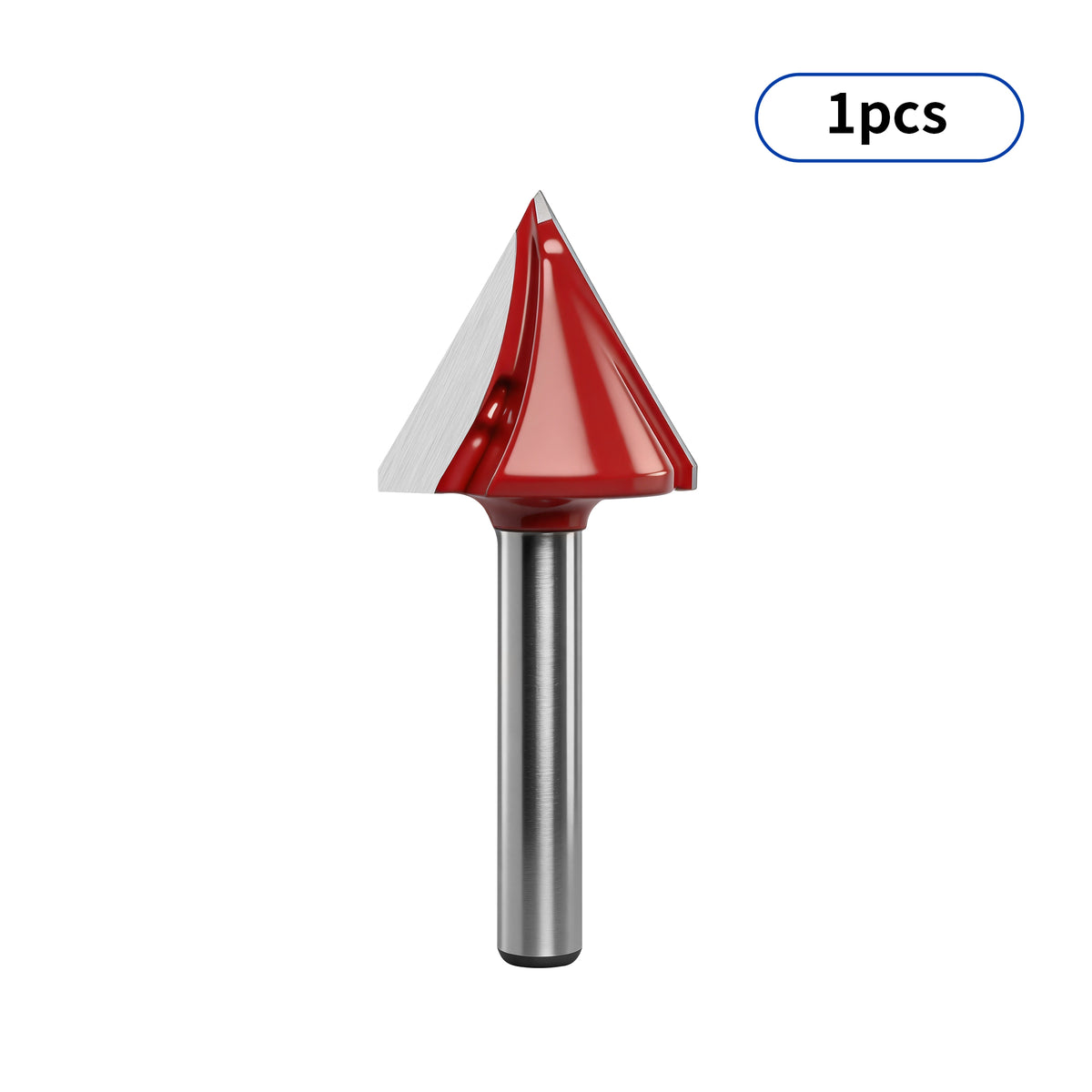
The TwoTrees 60° V-groove router bit is a concrete example of the angular form. Its current listing identifies woodworking V-groove milling and engraving among its applications. Use the selected variant's profile and dimensions to define the cut rather than assuming that the product name alone specifies every part of the channel.
A rounded form exposes a different section as depth changes. A shallow cut uses only the lower part of the curve, leaving a shallow concavity. That section is not necessarily a full semicircle. The actual radius, the rest of the cutting profile and the selected depth determine which portion of the curve reaches the wood.
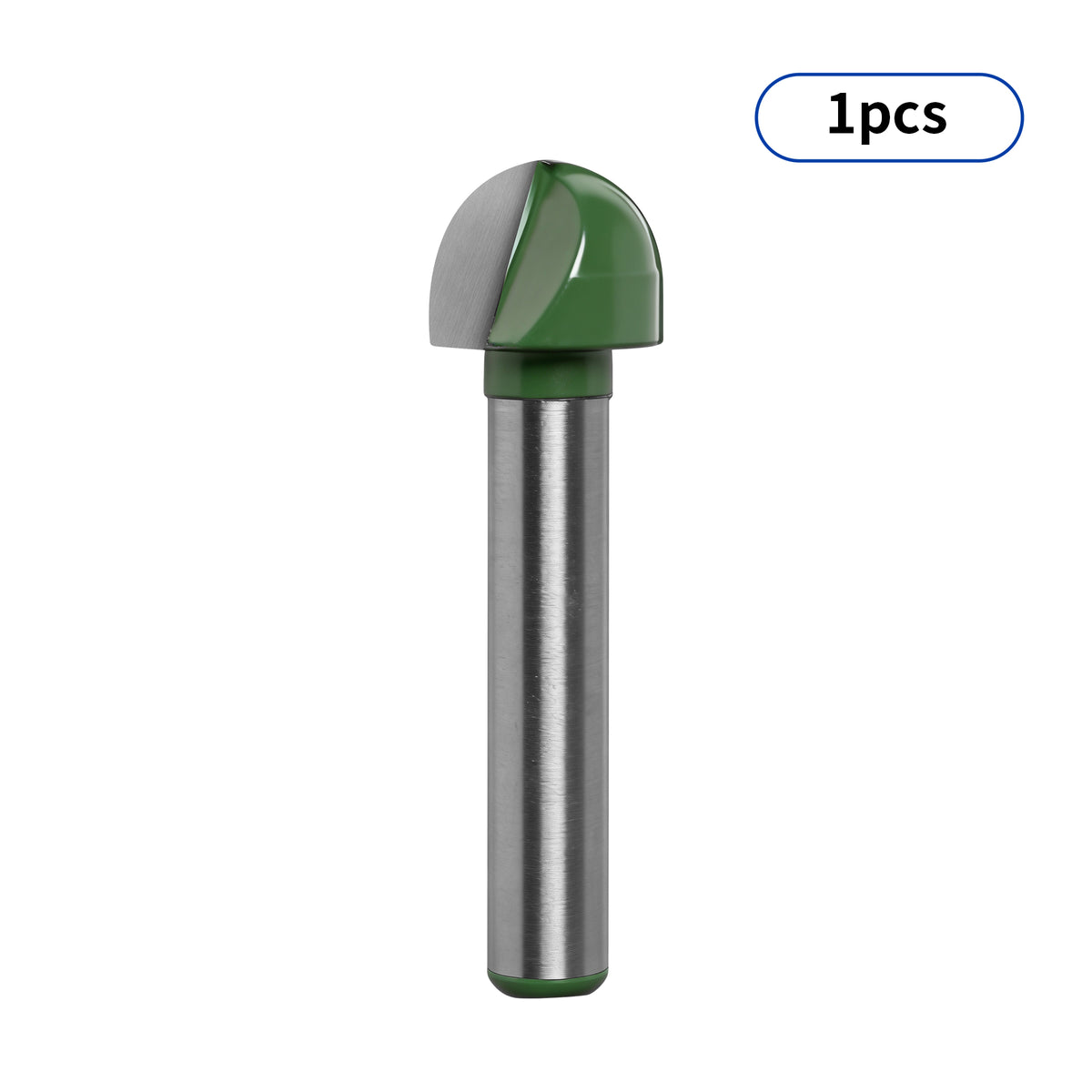
The TwoTrees round-bottom bit is listed for decorative wood patterns, arc shaping and semicircular groove carving. It provides an example of the rounded form. The listed application does not mean that every shallow pass with it leaves a complete semicircular channel.
A groove's surface width therefore answers only part of the question. A V and a concave profile might have similar openings while leaving different material beneath those openings. Matching the width would not make a rounded channel seat a component in the same way as an angular one. Likewise, changing depth to obtain a wider line changes the section and removes more material; it is not merely a change to the drawing's stroke width.
Return to the box lid before choosing that depth. If the design depends on a shallow rounded flute, a deeper semicircular section may change the intended appearance and the wood remaining below it. If it depends on a V incision, the angle and tip detail need to represent that intention. There is no single depth that settles these choices across different profiles and stock.
Check what the catalog means by “round nose”
Router-bit names can overlap. A catalog may use “round nose” for a rounded grooving form, while an end-mill catalog may use it for a ball-nose cutter. Inspect the cutting-profile drawing and dimensions rather than treating similar names as proof that two cutters are interchangeable. The end form, usable cutting length and intended operation must match the feature being planned.
A round-over tool is a different case. It shapes an exterior edge; a round-bottom grooving form creates a concave channel in a face. Dremel separates corner-rounding edge tools from its grooving category. Rounding a box lid's outer edge and cutting rounded decorative lines across its face are consequently different tasks, even though both descriptions contain the word “round.”
Neither a V nor a rounded grooving form is the default answer for a channel requiring a flat floor. If the drawing calls for a level seating surface, choose an appropriate tool and operation for that geometry. Decorative grooves, fitted channels and sculpted recesses should not be treated as the same feature simply because each removes wood below the top surface.
Represent the actual cutter before planning the cut
Once the section is decided, make the CAM tool definition represent the physical cutter. Compare its angle or radius, any specified tip flat and usable cutting dimensions with the tool library entry. A generic V-bit or round-nose entry can describe a different profile from the tool in hand, so an attractive preview is only useful when the modeled geometry is correct.
Then check the requirements that the profile does not answer: suitable wood and permitted operations, usable reach, holder clearance and the approved entry method. A matching shank establishes one holding dimension. It does not establish that the entire tool is suitable for the job, and neither a rounded nose nor the word “milling” authorizes a plunge into solid stock.
Use secure workholding and the machine's required guards and extraction. Stop and isolate the equipment as directed before handling or inspecting a cutter. If the next task is actually machining a rounded perimeter channel, the separate rounded-groove machining workflow addresses process questions beyond this shape comparison.
For the hypothetical lid, the finished choice starts with an angular incision or a concave flute. The selected cutter's real profile and the planned depth must describe that section together. The route can stay the same while the required groove changes.