Both template routing and CNC can repeat a wooden part. A physical template provides a master that a guided router follows; a CNC router follows programmed toolpaths derived from a digital design. Choose between them by the features you need to repeat, how each blank will locate, and what is likely to change—not simply by the number of parts.
An unchanged curved outline can be a strong case for a proven template. A family of parts with coordinated pockets, openings and personalized details can be a stronger case for digital control. Neither route removes setup, tool access or inspection from the job.
A good template is a reusable master, not an inferior substitute
Ordinary template routing uses a physical guide, not the camera tracking of a handheld optical CNC system. The operator controls the router while a bearing or guide bushing relates its position to the pattern. Lee Valley's guide to router templates describes applications including repeated edges, cavities and positioned holes. Repetition is therefore not exclusive to CNC.
The master determines what gets repeated. A bump in its edge can become a bump in every copy; an incorrectly positioned opening can become a consistent error. Making the template smooth and proving the first result is productive work, not wasted preparation. An existing, reliable template also has value that a comparison based only on new-machine features can overlook.
The template and finished shape are not always the same size. With a guide bushing, the edge of the cutter is separated from the bushing's outside surface. The offset is (bushing outside diameter − cutter diameter) ÷ 2. Whether the template must be larger or smaller depends on the inside or outside feature being routed. Lee Valley explains this relationship; verify the actual guide and cutter combination rather than assuming a one-to-one copy.
A bearing-guided pattern bit is a different arrangement. A matching bearing and cutter diameter can follow a master at the same nominal outline, but the bearing position, usable cutting length and support still matter. Do not carry a bushing offset into a bearing-guided setup, or assume that changing a bit leaves the finished geometry unchanged.
The blank must agree with the master every time
Imagine a hypothetical wooden organizer end panel with a curved top and a handle opening. For identical panels, the outline template may be straightforward. The more important question can be how the handle opening remains in the same place relative to that outline.
If separate guides are used, they need a dependable relationship to the blank or to one another. A well-made profile template does not locate a second guide by itself. Likewise, a rough-sawn edge that changes from blank to blank is a poor reference if the design assumes that edge is already finished and square.
CNC changes where this relationship is defined, but not the need for it. The design can place the profile and handle opening in the same coordinate system. The physical stock must then be held and referenced consistently in the machine. A misplaced blank, shifting fixture or incorrect work origin still changes the result.
Separate a geometry problem from a location problem. If the profile shape is wrong, correct the master or design. If the shape is right but displaced relative to the opening, examine the locating arrangement. Buying more capable hardware is not the first remedy for an uncertain reference.
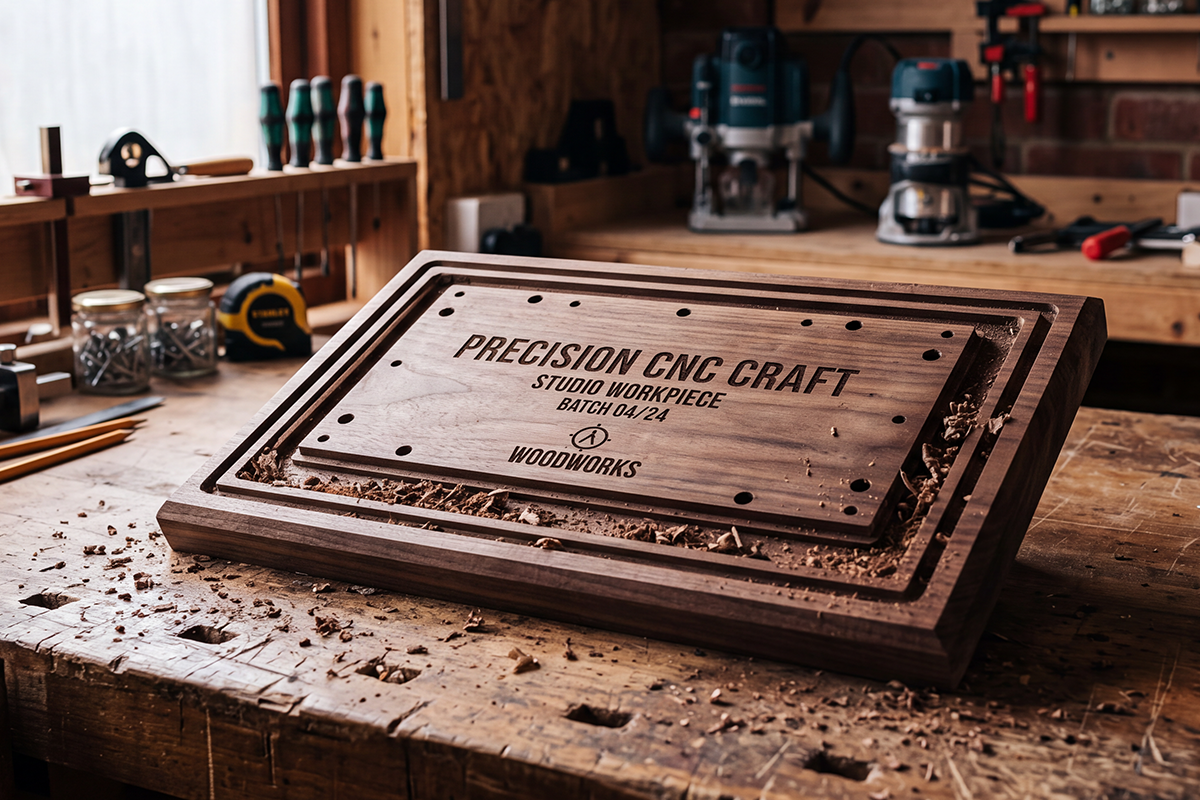
Ask what changes on the next version
For the fixed organizer panel, a proven physical master can be an excellent choice. The shape is stable, the locating arrangement is understood, and the same guide serves the next blank. Moving to CNC solely because another batch is needed may add digital preparation without solving a new problem.
Now keep the outline but move the handle opening, add a shallow recess, and introduce a name near the top. A physical-template workflow may need another master, an adjustable guide, or another locating operation. None is inherently wrong, but each has to preserve the intended feature relationships.
In a digital workflow, those relationships can remain in one design. A woodworking CNC machine becomes useful when the family of variants is easier to manage through coordinates and verified toolpaths than through a collection of physical masters. This is especially relevant when changes affect several features together rather than just one outside curve.
A digital revision is not automatically a production-ready revision. Autodesk's CAD/CAM introduction distinguishes modeling from CAM setup and toolpath definition. After changing the design, review the affected operations, tool access, stock, fixture and output program. A file that still opens is not evidence that every path remains appropriate.
Personalization illustrates the difference particularly well. If only a removable name label changes, the original physical template may remain entirely useful. If the routed text, pocket and opening all move with each variant, digital control may reduce the number of separate masters and alignments you need to manage. The value comes from the actual revision burden, not the word “custom.”
Some limits belong to cutting, whichever system guides it
A rotating cutter leaves an internal radius. CNC does not turn a round end mill into a square corner, and a physical template does not make an oversized guide pass through a narrow opening. The selected tool, approach and finished geometry must work together in either method.
Stock thickness and access also change the task. A bearing must be able to follow its intended reference; a guide bushing must have suitable clearance; a CNC holder must stay clear of the work and fixture. A path visible in a drawing is not the same as a usable path for the complete tool assembly.
For a small panel considered on the ED1 enclosed desktop CNC router, evaluate the blank and clamping arrangement together. The finished outline alone does not tell you whether the setup fits. Allow room for locating, securing and reaching the work, and use cutters suitable for the material and installed holder.
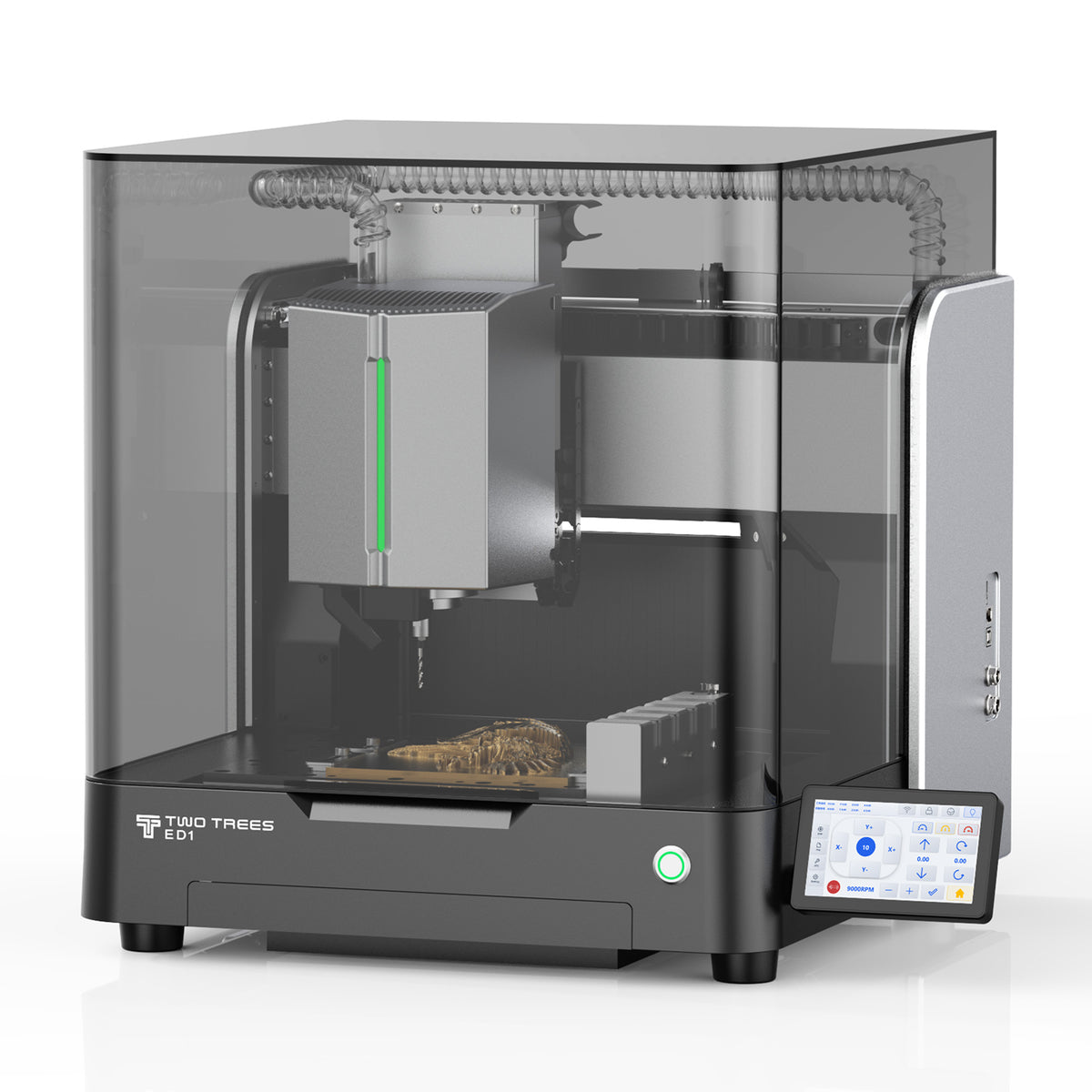
When choosing CNC router bits for woodworking, compare the exact geometry, shank, reach and intended operation. Do not assume a tool suitable for one CNC spindle also fits a handheld router, or that a bearing-guided bit and a plain end mill are interchangeable because their cutting diameters match.
Keep the master-making and finishing work in the comparison
Template routing includes preparing and proving the master, roughing the blanks as appropriate, locating and securing the guides, routing, and finishing. CNC includes preparing the design and toolpaths, establishing the setup, checking the program, machining, and finishing. Comparing only the minutes when the cutter touches wood leaves out much of both jobs.
Existing skills and assets matter. A shop with a proven master and a reliable locating method starts from a different position than a maker with only a digital sketch. Conversely, repeatedly rebuilding physical guides for new sizes may be the work that a programmed process is best placed to reduce. There is no universal batch quantity at which the answer changes.
A mixed method is also possible. A suitably configured CNC can make a physical template, which is then proved with the actual guide and used for manual copies. Cutting the master does not prove the offset, attachment or finished copy automatically; it simply gives the master another manufacturing route.
For either route, follow the exact equipment's safety instructions. Stop and isolate equipment before setup or tool changes; secure stock and guides and keep fasteners out of the cutter and base's path. The Grizzly trim-router manual illustrates these template-clearance responsibilities for its own model. Do not transfer another machine's feed direction, accessories or operating limits without checking your equipment. CNC's programmed motion still requires appropriate extraction, protection and supervision.
For the fixed organizer panel, retain a proven template if it already repeats the needed features well. For the version whose opening, recess and lettering change together, a digital design and verified CNC operations may be easier to manage. Choose where the geometry and its revisions should live; both methods can repeat a shape, but they place different demands on the next change.